Xiaomi HyperOS 4:The Era of “Liquid Glass”, Smarter AI, and Major UI Changes
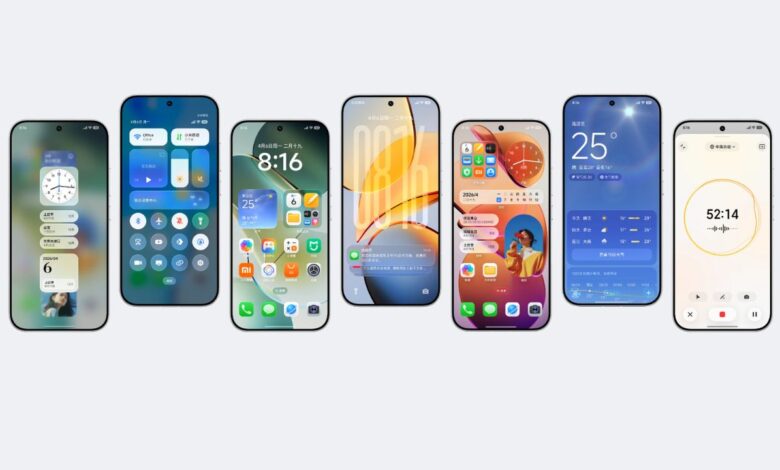
Xiaomi has announced HyperOS 4, with a huge visual overhaul called “Soft Light Glass,” a highly intuitive Super XiaoAI 2.0 assistant, and massive HyperCore performance bumps. The new aesthetics, alongside AI memory preloading and deep lock screen customisations, make it Xiaomi’s most ambitious software leap yet.
Soft Light Glass
If you like translucent, sleek interfaces, then HyperOS 4 should be right up your alley. Xiaomi is leaving behind the old designs and is embracing a new visual paradigm. The “Soft Light Glass” or Liquid Glass interface heavily uses transparencies, layered materials, and fluid animations. The system puts serious efforts to render realistic light refraction effects to make visual elements look much deeper and more premium. The interface is adaptive, changing its look based on your current content and lighting conditions. This graphical revamp will have a direct impact on everything from notifications and the control center to the home screen and system applications.

Many Ways to Personalise
HyperOS 4 finally gives users the granular aesthetic control they’ve been craving.
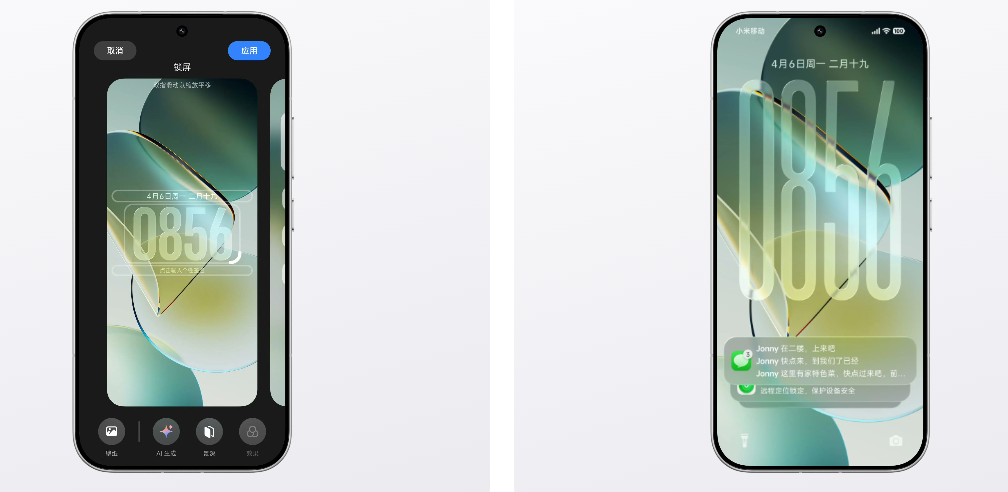
Deep customisation for your lock screen, allowing you to adjust the clock and notifications as you please. Home screen UI has been updated to allow you to resize folders and group widgets together in an intuitive manner. Switching between Portrait and Landscape modes is now completely seamless. Floating apps will also rotate automatically to match your screen orientation.
HyperCore Performance Enhancements
Xiaomi is showing that HyperOS 4 is not just a pretty skin, but is heavily optimised under the hood to ensure responsiveness. A new AI-Based memory preloading system can predict what resources you will need next and pre-load them in the RAM even before you tap the app. This AI preloading still loads apps about 18% faster even after 9 hours straight of heavy phone usage. The developers managed to shave 200ms off the cold startup time of the camera app. HDR photo processing algorithm is much faster, reducing the processing time of a photo from 310ms to just 240ms. There are major optimisations to video playback, which should mean that dropped frames become a non-issue.

Super XiaoAI 2.0
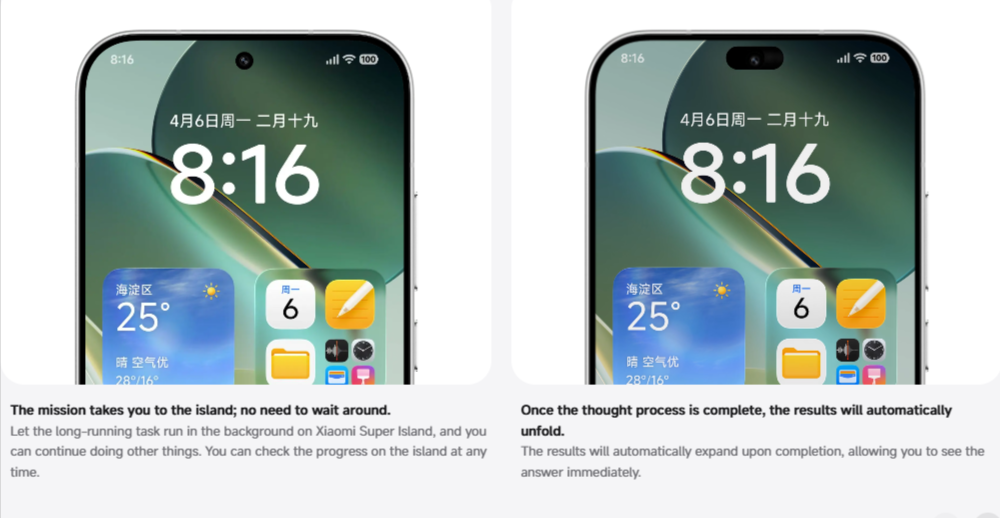
HyperOS 4 has Artificial Intelligence embedded in its core, going far beyond basic chatbot functions. New Super XiaoAI 2.0 assistant powered by Xiaomi’s proprietary MiMo Large Language Model (LLM). Built to manage complicated daily tasks like transcribing your voice, organising your notes, searching your photo albums, and controlling your smart home or smart car. If you ask it something complex, it’ll use the “Xiaomi Super Island” (the pop-up UI around the punch-hole camera) to let you know it’s thinking, before it gives you a full-screen answer. One new feature that really stands out is the “Inspiration Ball”, a context-aware smart pointer. How it works: You can drag the Inspiration Ball over a physical address to immediately begin map navigation, or over a photo of a product to automatically search for it online.
Release Date
The HyperOS 4 rollout strategy starts locally with a staged public beta. On August 14, 2026, the public beta went live in China.
HyperOS Update Rollout
Xiaomi is rolling out the latest software update in three major waves. Check the schedule below to see when eligible devices are expected to receive the update.
Afternoon Release
First wave — current flagship devices & newest tabletsThe very first wave focuses on Xiaomi’s top-tier current flagships and newest tablets. These eligible devices are scheduled to receive the update starting the afternoon of August 14.
- Xiaomi 17 Ultra (including Leica Edition)
- Xiaomi 17 Pro Max
- Xiaomi 17 Pro
- Xiaomi 17
- Redmi K90 Pro Max (including Champion Edition)
- Redmi K90
- Xiaomi Pad 8 Pro
- Xiaomi Pad 8
Gradual Release
Second wave — 17T series, Xiaomi 15 & performance tabletsThe second batch broadens coverage to the 17T series, previous-generation Xiaomi 15 flagships, and high-performance tablets. This rollout will be deployed gradually starting August 27.
- Xiaomi 17 Max
- Xiaomi 17T Pro
- Xiaomi 17T
- Xiaomi 15 Ultra (including Satellite Edition)
- Xiaomi 15S Pro
- Xiaomi 15 Pro
- Xiaomi 15
- Redmi K90 Max
- Redmi K90 Ultra
- Redmi K Pad 2
Gradual Release
Final wave — Redmi K100, K80, foldables & Pad 7The final confirmed wave targets the newest Redmi K100 flagships, older K80 models, foldables, and the Pad 7 lineup. Updates will roll out in stages starting September 17.
- Redmi K100 Pro Max
- Redmi K100 Pro
- Redmi K80 Pro
- Redmi K80 Pro Extreme Edition
- Redmi K80
- Xiaomi Mix Flip 2
- Xiaomi Pad 7 Ultra
- Xiaomi Pad 7S Pro 12.5