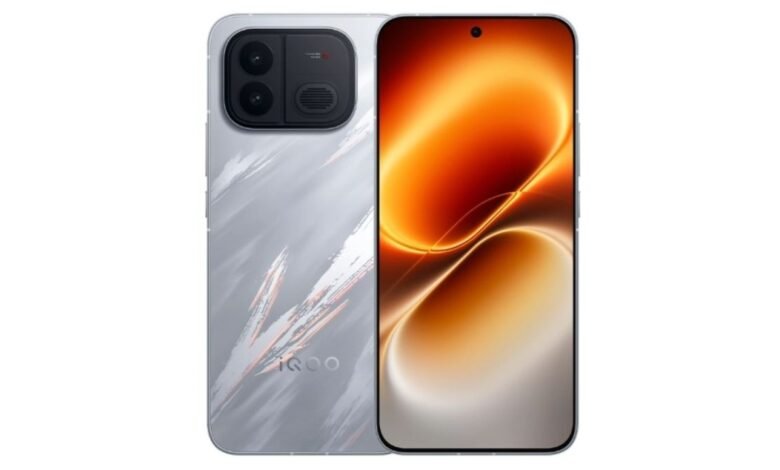
A phone with a fan inside it sounds like a gimmick until someone measures it. Gaming Pathshala did exactly that with the iQOO Neo 12, running BGMI, Game for Peace and Valorant Mobile for hours with the fan on and off — and the answer is split down the middle. The fan is real, but it does almost nothing for frame rates. What it does, it does to heat: about 4°C of it.
Featured image: the iQOO Neo 12 — Image: iQOO (via GSMArena).
At a glance
The Phone in Brief
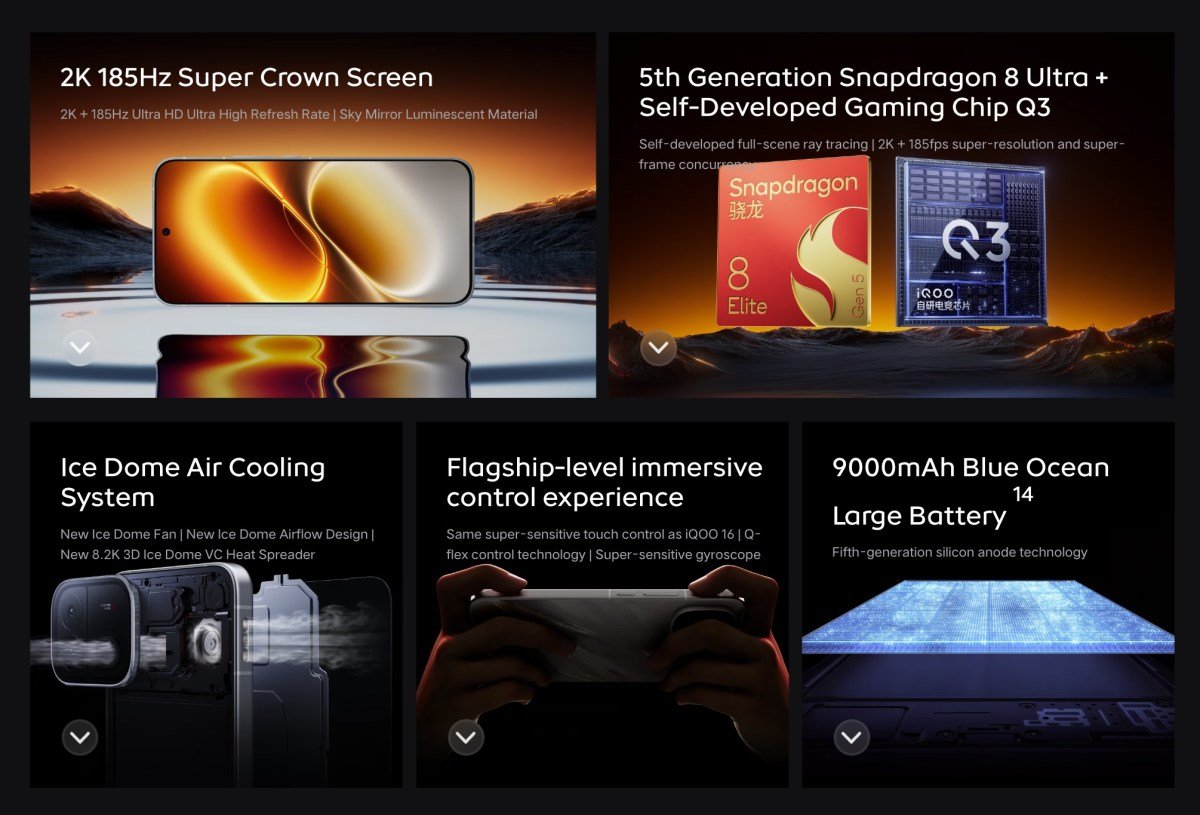
The iQOO Neo 12 launched in China on 28 October 2026, and it is the first Neo phone with a fan built into the body. A 17mm fan with 59 blades sits behind the camera module — you can see its grille in the camera island — and iQOO says it moves up to 9,770 cubic centimetres of air per minute, with three speed settings. A large 3D vapor chamber, which iQOO calls the Ice Dome, sits under it. The rest of the spec sheet reads like a flagship: Snapdragon 8 Elite Gen 5 with iQOO’s own Q3 gaming chip, a 6.83-inch AMOLED panel at 2K resolution running up to 185Hz, a 9,000mAh battery with 100W wired charging, and an IP68/IP69 rating. It starts at CNY 4,399 in China, about $660.
Two things matter for this test. First, iQOO claims more than 50 games run natively at 185fps — that is the company’s claim, and this video is one of the first independent checks of it. Second, the phone has no announced launch in India or Pakistan, and the Neo 11 never reached India either, so the creator tested an imported Chinese unit. That is why BGMI stayed capped at 90 FPS through the whole test: the game holds frame rates lower on a phone that has not officially launched in India, and the creator says the phone would “easily” give 120 FPS otherwise.
How the Test Was Done
The fan is controlled from the phone’s Control Centre, with on, off, three modes — Quiet, Smart and a custom mode — plus adjustable fan speed. A smoke demo in the video shows air drawn in from the top of the phone and pushed out the side. Temperatures were read with a thermal camera rather than a handheld gun.
BGMI ran on Smooth graphics at 90 FPS. Game for Peace ran on Balanced graphics with frame rate peaked to 185 FPS, and Valorant Mobile ran at the full 185 FPS. Each game got about half an hour of play with the fan on, and BGMI got the same routine repeated with the fan off, so the comparison is like-for-like: same settings, same maps, same duration.
BGMI: Fan On vs Fan Off
That 0.20 FPS gap is the whole story for frame rates: the fan changes nothing you can feel. What it changes is heat. With the fan on, the phone sat at 37–38°C through the BGMI sessions; with it off, the same sessions ran at about 42°C. The creator is clear about what the fan is for — its real job is holding temperatures down, not pushing frame rates up — and he notes it costs a little extra battery, though he gives no exact figure for that. He also adds a useful contrast: on some other phones he has reviewed, RedMagic and Infinix among them, turning the fan on actually gave worse FPS than leaving it off. That does not happen here.
The 185Hz Games: Game for Peace and Valorant Mobile
This is where the 185Hz display gets its workout. Game for Peace averaged 183 FPS out of a possible 185 across half an hour with the fan on, dipping to 178 at its lowest. The creator did not repeat a fan-off run on camera for this game, saying his off-camera checks gave the same frame rate, with only temperature differing by 4–5°C. He credits the game’s own optimisation as much as the hardware for the result.
Valorant Mobile did even better: an average of almost 184 FPS over half an hour, with the lowest reading near 173, seen once right at the end of the session. Both games, in other words, run at essentially the full 185 FPS the panel can show — the first solid independent check of iQOO’s 50-plus-games claim.
Battery and Heating
The 9,000mAh battery is the other half of the story. BGMI used 9% in about an hour of play, which projects to roughly 10 hours of BGMI on one charge with the fan on. The 185 FPS games are far hungrier: Game for Peace and Valorant Mobile each used about 12% in half an hour, projecting to about 3 hours 40–45 minutes from full to empty. Peak temperatures across the session were 37–38°C with the fan on, about 42°C with it off, 43°C in Game for Peace and about 41°C in Valorant. The creator’s own unit scored 4.2 million on AnTuTu, and he flags one weak spot for gamers: the USB Type-C port is version 2.0, which he calls poor for a gaming phone.
Final Verdict: A Real Fan With a Narrow Job
The fan is real, not a gimmick — but its job is narrow. It will not give you more frames in BGMI, where the difference was two-tenths of a frame per second. It will keep the phone about 4°C cooler while you play, and in the 185 FPS games it holds the same frame rate while running cooler. For a phone that also carries a 9,000mAh battery and a 185Hz panel, that is a genuine trade: a little extra battery drain for a cooler hand. The open question is whether the phone ever reaches India or Pakistan at a price that makes sense — the Neo 11 was skipped, partly because it could not hit the expected under-₹40,000–50,000 range, and iQOO has said nothing about the Neo 12 outside China.
What to Watch Next
Two dates matter. The creator expects the BGMI 4.7 update around 18–19 November to add 120 FPS support on this phone, which would finally let BGMI use the hardware properly — that is his expectation, not a confirmed change. And any word from iQOO on an India launch would change the picture completely, since the 90 FPS cap in BGMI exists only because the phone has not officially launched there. This post will be updated if either lands.