Huawei Watch Air
+ CompareSCORE
- Released 2026, November 24
- OS HarmonyOS 7.0
- Display 1.92" LTPO AMOLED
- Camera N/A
- RAM N/A
- Battery 350mAh
PROS
- 1 Thinnest Huawei watch ever at 6.9mm, just 27g
- 2 TC4 titanium unibody with sapphire glass
- 3 1.92-inch LTPO AMOLED at 3,500 nits peak
- 4 ECG, SpO2, skin temperature and one-click health check
- 5 5 days of battery life
- 6 10-minute charge gives a full day
- 7 110+ sports modes with dual-band GNSS
CONS
- 1 No Pakistan or international launch announced yet
- 2 No camera (expected on a watch, but the spec table shows N/A)
- 3 No cellular connectivity — needs the phone nearby for calls and data
- 4 Milanese strap version costs Rs. 21,000 more than the silicone version
- 5 5ATM rating does not cover hot showers, saunas or diving
Prices
Specification
Network
| Technology The mobile network technology the phone uses, such as GSM, HSPA or LTE. It determines which types of networks the phone can connect to. | No cellular connectivity |
Body
| Dimensions The height, width and thickness of the phone, usually measured in millimetres. Smaller dimensions generally make a phone easier to hold. | 43.1 x 39.2 x 6.9 mm |
| Weight How heavy the phone is, measured in grams. A lower weight generally makes a phone more comfortable to hold for long periods. | 27 g (without strap) |
| Build The materials and construction used for the phone body, such as the front glass, back and frame. | TC4 titanium unibody, high-gloss finish; sapphire glass; rotating crown + multi-function button |
| Others Additional specifications that do not fit the other categories. This lists any remaining relevant details about the phone. | 5ATM + IP6X case (no hot showers, saunas or diving). Strap: 20mm, wrist size 140–210mm; Milanese mesh (stainless steel), composite woven, easy-fit fluoroelastomer |
Display
| Type The kind of display panel used in the phone. Different panel types affect colour, contrast and power use. | LTPO 2.0 AMOLED |
| Size The diagonal size of the display, measured in inches from corner to corner. | 1.92 inches, 480 x 408 pixels (~328 ppi) |
| Resolution The number of pixels in the display, shown as width by height. Higher resolution generally means a sharper image. | 480 x 408 pixels (~328 ppi) |
| Protection Protection applied to the display or body, such as strengthened glass or water and dust resistance ratings. | sapphire glass |
| Features Additional functions included for that part of the phone, such as special modes or enhancements. The list shows which extra functions are supported. | 60Hz refresh, 3,500 nits peak brightness, 1.4mm bezels, 86% screen-to-body ratio, sapphire glass |
Platform
| OS The operating system software that runs the phone and its apps. Its version affects features, security and app compatibility. | HarmonyOS 7.0 |
Memory
| Card slot A special slot for inserting a memory card. Memory cards allow you to expand the phone's built-in memory (or in the past these slots have been used to add some missing features such as Wi-Fi connectivity). Memory cards have different capacities and are used to store and transfer files between compatible devices. There are several types of memory cards. The most popular and frequently used by mobile phone manufacturers is microSD; however, up until recently Sony Ericsson exclusively used the Memory Stick Micro (M2) card type developed by Sony. | No |
| RAM The memory the phone uses to run apps and keep them open in the background, measured in gigabytes. More RAM generally helps multitasking run smoothly. | N/A |
Camera
| Single A camera is a device that captures light and processes it into an image. It does this through a lens, which focuses the light onto a light-sensitive surface where a picture is formed. This could be film in traditional cameras or an electronic sensor in digital cameras. | N/A (no camera) |
More
| Loudspeaker The built-in speaker used for calls on speakerphone, music and videos. It states whether the phone has one and its type, such as stereo speakers. | Yes (speaker + microphone for Bluetooth calls) |
| 3.5mm jack A round headphone port for wired headphones and audio accessories. If present, wired audio can be used without an adapter. | No |
| Bluetooth A short-range wireless technology for connecting accessories such as headphones and speakers. A newer version generally offers better range, speed and power efficiency. | 6.0 |
| GPS Satellite positioning used to find the phone location for maps and navigation. Support for more satellite systems can improve accuracy. | Dual-band GNSS |
| NFC Near Field Communication, a short-range wireless feature for contactless payments and quick pairing. It works only over very short distances. | Yes |
| USB The USB port used for charging and data transfer. Newer USB versions generally offer faster transfer speeds and a reversible connector. | No (wireless charging cradle) |
| Infrared port An infrared (IR) port is a port on an electronic device that sends and receives data using infrared light. IR ports were commonly used in wireless devices to allow for fast communication with other devices, such as base stations. IR ports work by allowing two devices to face each other and share data using infrared rays within a range of 10 meters. | |
| Sensors Built-in sensors that detect motion, light, position and other conditions. They enable features such as auto-rotation, face unlock and navigation. | Heart rate, SpO2, skin temperature, ECG, accelerometer, gyroscope |
| Battery Type The kind of battery used in the phone and whether it can be removed. It describes the battery technology and form. | 350 mAh, Si-C. Up to 5 days typical use. |
| Battery Capacity The size of the battery, measured in milliamp-hours (mAh). A higher capacity usually means longer use between charges. | 350 mAh |
| Charging How the battery is charged, including wired and wireless charging speeds in watts. Higher wattage usually means faster charging. | Wireless (magnetic cradle); 10-minute charge gives a full day of use |
| Made by The company that makes the device. It names the manufacturer responsible for the phone. | Huawei |
| Color The color options in which the phone is available. Color choice does not affect performance or features. | Silver, Light Gold, Black (case). Straps: Milanese mesh, composite woven, fluoroelastomer |
Disclaimer
We do not guarantee that the information of this page is 100% accurate and up to date. Read more
Design and Display
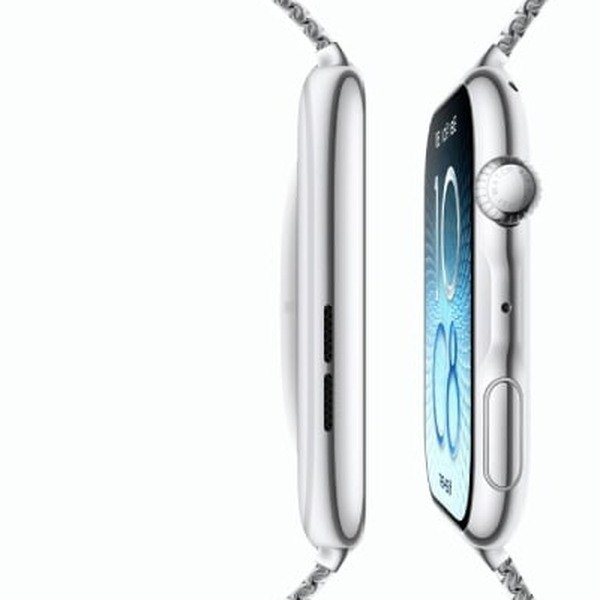
- The Watch Air is Huawei’s thinnest smartwatch at 6.9mm thick and about 27g without the strap, built as a TC4 titanium unibody with a high-gloss finish and sapphire glass.
- The 1.92-inch LTPO 2.0 AMOLED display (480 x 408, 328 ppi) peaks at 3,500 nits with 1.4mm bezels and an 86% screen-to-body ratio, and runs at 60Hz.
- A rotating crown and a multi-function button sit on the right side; the watch is rated 5ATM and IP6X, though Huawei says it is not for hot showers, saunas or diving.
- Three case colours — silver, light gold and black — with 20mm straps in Milanese mesh, composite woven or easy-fit fluoroelastomer.
Performance
- HarmonyOS 7.0 runs on a stacked motherboard just 3.68mm thick, with a miniaturised vibration motor and speakers and an irregular-shaped battery packed around it.
- 110+ sports modes including skiing and cycling, with dual-band GNSS for route tracking.
- Bluetooth calls through the built-in speaker and microphone, plus NFC and Bluetooth 6.0.
Camera
- The Watch Air has no camera — photography is not part of this watch. (This section is kept short on purpose: the watch’s sensors are covered under Features.)
Battery and Charging
- 350mAh silicon-carbon battery, rated for up to 5 days of typical use.
- A 10-minute charge gives a full day of use; charging is wireless through the magnetic cradle.
Software
- HarmonyOS 7.0 with heart rate, SpO2, skin temperature and ECG sensing, sleep and stress tracking, a one-click micro health check, uric-acid and diabetes risk assessments, and AI health insights.
Price in Pakistan
The Watch Air launched in China on 24 November 2026 and has not been announced for Pakistan or any international market, so the prices below are the official China launch prices converted at the 24 November rate (CNY 1 = PKR 41.4118) — they are Expected prices, not official Pakistan prices.
- Silicone / fluoroelastomer strap — Rs. 103,999 (Expected)
- Stainless steel Milanese mesh strap — Rs. 124,999 (Expected)
| Variant | Price |
|---|---|
| Silicone / fluoroelastomer strap | Rs. 103,999 |
| Stainless steel Milanese mesh strap | Rs. 124,999 |
Buying in Pakistan
- The Watch Air is not officially sold in Pakistan yet — any unit on sale now is a grey import, so confirm it is the genuine Huawei Watch Air and check the strap type before paying, because the strap sets the price.
- There is no PTA/DIRBS registration for a watch — it has no cellular connectivity and needs no SIM — but the seller’s warranty is the only warranty, so get it in writing.
- The composite woven strap version has no published price yet; if a seller quotes one, treat it as their own figure, not Huawei’s.
Final Verdict: Huawei’s thinnest watch, priced like a flagship
Questions and opinions about Huawei Watch Air
What is the Huawei Watch Air price in Pakistan?
The Watch Air has not launched in Pakistan. The official China prices convert to Rs. 103,999 (silicone strap) and Rs. 124,999 (Milanese mesh strap) at the 24 November rate — these are Expected prices.
When will the Huawei Watch Air launch in Pakistan?
Huawei has not announced an international or Pakistan launch. The watch launched in China on 24 November 2026, with open sales from 4 December 2026.
How thin is the Huawei Watch Air?
6.9mm thick and about 27g without the strap, in a TC4 titanium unibody with sapphire glass — Huawei's thinnest smartwatch.
What is the Watch Air battery life?
Up to 5 days of typical use from its 350mAh silicon-carbon battery; a 10-minute charge gives a full day.
Does the Huawei Watch Air have ECG?
Yes — ECG, heart rate, SpO2 and skin temperature sensing, plus a one-click micro health check and uric-acid and diabetes risk assessments.