Apple iPhone XS
+ CompareSCORE
- Release September 2018
- OS iOS 12
- Display 5.8" Super AMOLED
- Camera 12MP Dual
- RAM 4GB / 64GB
- Battery 2658mAh
PROS
- 1 Super AMOLED display with Dolby Vision and HDR10
- 2 A12 Bionic still smooth for everyday use
- 3 IP68 water resistance
- 4 Compact 5.8-inch size with stainless steel frame
- 5 Face ID and stereo speakers
CONS
- 1 No iOS 26 — software support is at its end
- 2 2658mAh battery is small by 2026 standards and used units show degraded health
- 3 No Night mode or ultra-wide camera
- 4 No 5G
- 5 Only sold used in Pakistan — no Apple warranty
Specification
Network
| Technology The mobile network technology the phone uses, such as GSM, HSPA or LTE. It determines which types of networks the phone can connect to. | GSM / HSPA / LTE |
| 2G bands The second-generation mobile network bands the phone can use for calls and basic data. Support for more bands means better compatibility with different networks. | GSM 850 / 900 / 1800 / 1900 - SIM 1 & SIM 2 |
| 3G bands The third-generation mobile network bands the phone supports for calls and mobile data. More supported bands mean better compatibility with different networks. | HSDPA 850 / 900 / 1700(AWS) / 1900 / 2100 |
| 4G bands The fourth-generation (LTE) mobile network bands the phone supports. More supported bands mean better compatibility and coverage on different networks. | 1, 2, 3, 4, 5, 7, 8, 12, 13, 14, 17, 18, 19, 20, 25, 26, 28, 29, 30, 32, 34, 38, 39, 40, 41, 46, 66, 71 - A2097 1, 2, 3, 4, 5, 7, 8, 12, 13, 14, 17, 18, 19, 20, 25, 26, 28, 29, 30, 32, 34, 38, 39, 40, 41, 46, 66 - A1920 1, 2, 3, 4, 5, 7, 8, 12, 13, 14, 17, 18, 19, 20, 25, 26, 28, 29, 30, 32, 34, 38, 39, 40, 41 - A2100 |
| Speed The data speed the phone can support on mobile networks. Higher speeds mean faster downloads and uploads when the network supports them. | HSPA 42.2/5.76 Mbps, LTE-A (4CA) Cat16 1024/150 Mbps, EV-DO Rev.A 3.1 Mbps |
Body
| Dimensions The height, width and thickness of the phone, usually measured in millimetres. Smaller dimensions generally make a phone easier to hold. | 143.6 x 70.9 x 7.7 mm |
| Weight How heavy the phone is, measured in grams. A lower weight generally makes a phone more comfortable to hold for long periods. | 177 g |
| Build The materials and construction used for the phone body, such as the front glass, back and frame. | Front/back glass, stainless steel frame |
| SIM The SIM card type and number the phone accepts, such as Nano-SIM or dual SIM. It determines how many mobile connections can be used. | Nano-SIM and eSIM |
Display
| Type The kind of display panel used in the phone. Different panel types affect colour, contrast and power use. | Super AMOLED capacitive touchscreen, 16M colors |
| Size The diagonal size of the display, measured in inches from corner to corner. | 5.8 inches |
| Resolution The number of pixels in the display, shown as width by height. Higher resolution generally means a sharper image. | 1125 x 2436 pixels, 19.5:9 ratio (~458 ppi density) |
| Protection Protection applied to the display or body, such as strengthened glass or water and dust resistance ratings. | Scratch-resistant glass, oleophobic coating |
| Features Additional functions included for that part of the phone, such as special modes or enhancements. The list shows which extra functions are supported. | Dolby Vision, HDR10, wide color gamut, 3D Touch, True-tone, 120 Hz touch-sensing |
Platform
| OS The operating system software that runs the phone and its apps. Its version affects features, security and app compatibility. | iOS 12, upgradable to iOS 18 |
| Chipset The main processor platform that powers the device. It controls performance, power efficiency and supported features. | Apple A12 Bionic (7 nm) |
| CPU The central processing unit that runs apps and tasks. More cores and higher clock speeds generally mean faster performance. | Hexa-core 2.49 GHz (2x Vortex + 4x Tempest) |
| GPU The graphics processing unit that handles images, video and games. A more capable GPU generally gives smoother graphics and gaming. | Apple GPU (4-core graphics) |
Memory
| Card slot A special slot for inserting a memory card. Memory cards allow you to expand the phone's built-in memory (or in the past these slots have been used to add some missing features such as Wi-Fi connectivity). Memory cards have different capacities and are used to store and transfer files between compatible devices. There are several types of memory cards. The most popular and frequently used by mobile phone manufacturers is microSD; however, up until recently Sony Ericsson exclusively used the Memory Stick Micro (M2) card type developed by Sony. | No |
| Internal Storage The built-in storage space for apps, photos and files, measured in gigabytes. More storage lets you keep more content on the phone. | 64 GB / 256 GB / 512 GB |
| RAM The memory the phone uses to run apps and keep them open in the background, measured in gigabytes. More RAM generally helps multitasking run smoothly. | 4 GB |
Camera
| Dual A camera is a device that captures light and processes it into an image. It does this through a lens, which focuses the light onto a light-sensitive surface where a picture is formed. This could be film in traditional cameras or an electronic sensor in digital cameras. | 12 MP, f/1.8, 26mm (wide), 1/2.55", 1.4µm, dual pixel PDAF, OIS + 12 MP, f/2.4, 52mm (telephoto), 1/3.4", 1.0µm, OIS, PDAF, 2x optical zoom |
| Features Additional functions included for that part of the phone, such as special modes or enhancements. The list shows which extra functions are supported. | Quad-LED dual-tone flash, HDR (photo/panorama) |
| Video The meaning of VIDEO CAMERA is a camera that records video and usually audio | 2160p@24/30/60fps, 1080p@30/60/120/240fps, HDR, stereo sound rec. |
| Selfie camera The front-facing camera used for self-portraits and video calls. Higher megapixels can give more detail, along with features such as autofocus or flash. | Single 7 MP, f/2.2, 32mm (standard). Features: Face detection, HDR. Video: 1080p@30fps |
More
| Alert types The ways the phone signals incoming calls and notifications, such as vibration, ringing tones or MP3 ringtones. | Vibration, proprietary ringtones |
| Loudspeaker The built-in speaker used for calls on speakerphone, music and videos. It states whether the phone has one and its type, such as stereo speakers. | Yes, with stereo speakers |
| 3.5mm jack A round headphone port for wired headphones and audio accessories. If present, wired audio can be used without an adapter. | No |
| WLAN The Wi-Fi standards the phone supports for wireless internet. Newer standards generally offer faster speeds and better connections. | Wi-Fi 802.11 a/b/g/n/ac, dual-band, hotspot |
| Bluetooth A short-range wireless technology for connecting accessories such as headphones and speakers. A newer version generally offers better range, speed and power efficiency. | 5.0, A2DP, LE |
| GPS Satellite positioning used to find the phone location for maps and navigation. Support for more satellite systems can improve accuracy. | Yes, with A-GPS, GLONASS, GALILEO, QZSS |
| NFC Near Field Communication, a short-range wireless feature for contactless payments and quick pairing. It works only over very short distances. | Yes |
| FM radio Mobile phones that support FM radio have a dedicated FM radio receiver chip. This chip is responsible for receiving FM radio signals and converting them into audio signals that can be played through the phone's speakers or headphones. | No |
| USB The USB port used for charging and data transfer. Newer USB versions generally offer faster transfer speeds and a reversible connector. | Lightning, USB 2.0 |
| Infrared port An infrared (IR) port is a port on an electronic device that sends and receives data using infrared light. IR ports were commonly used in wireless devices to allow for fast communication with other devices, such as base stations. IR ports work by allowing two devices to face each other and share data using infrared rays within a range of 10 meters. | |
| Sensors Built-in sensors that detect motion, light, position and other conditions. They enable features such as auto-rotation, face unlock and navigation. | Face ID, accelerometer, gyro, proximity, compass, barometer |
| Battery Type The kind of battery used in the phone and whether it can be removed. It describes the battery technology and form. | Non-removable Li-Ion |
| Battery Capacity The size of the battery, measured in milliamp-hours (mAh). A higher capacity usually means longer use between charges. | 2658 mAh (10.13 Wh) |
| Charging How the battery is charged, including wired and wireless charging speeds in watts. Higher wattage usually means faster charging. | Fast charging (50% in 30 min), Qi wireless charging |
| Made by The company that makes the device. It names the manufacturer responsible for the phone. | USA |
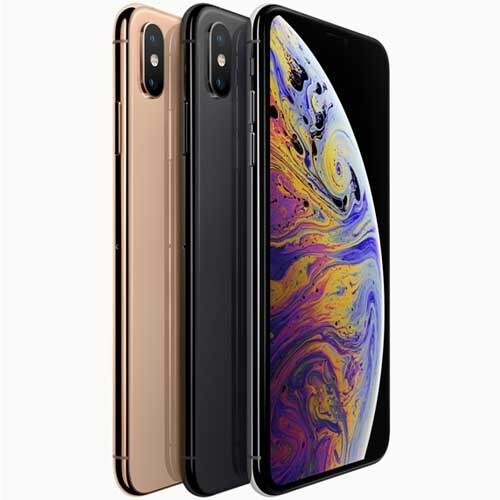
| Color The color options in which the phone is available. Color choice does not affect performance or features. | Space Gray, Silver, Gold |
Disclaimer
We do not guarantee that the information of this page is 100% accurate and up to date. Read more
Design and Display
The iPhone XS is a compact flagship built around a stainless steel frame with glass on the front and back, and it carries an IP68 rating for dust and water resistance (up to 2 metres for 30 minutes). Say it plainly, though: on an eight-year-old used unit, those seals are no longer guaranteed, so do not buy one expecting it to survive a dunk.
The 5.8-inch Super AMOLED display runs at 1125 x 2436 pixels (about 458 ppi) with Dolby Vision, HDR10, a wide colour gamut, 3D Touch, True Tone and 120 Hz touch-sensing. It is still a lovely screen for videos and photos. The phone measures 143.6 x 70.9 x 7.7 mm and weighs 177 g, which makes it one of the easiest iPhones to use one-handed. Colours: Space Gray, Silver and Gold.
Performance
Inside is the Apple A12 Bionic (7 nm) with a hexa-core CPU (2x Vortex + 4x Tempest) running at 2.49 GHz, an Apple 4-core GPU and 4GB of RAM. Storage is 64GB, 256GB or 512GB, with no card slot. For everyday use in 2026 — calls, messaging, social apps, browsing and light games — the XS is still smooth. But it is a 2018 chip, and it does not compete with a 2026 mid-ranger on sustained performance or efficiency. Heavy games and long video edits will show its age.
Camera
- Main: 12MP, f/1.8, 26mm wide, 1/2.55″, 1.4µm, dual pixel PDAF, OIS
- Telephoto: 12MP, f/2.4, 52mm, 1/3.4″, 1.0µm, OIS, PDAF, 2x optical zoom
- Selfie: 7MP, f/2.2, 32mm TrueDepth camera with Face ID
Video: 4K at 24/30/60fps and 1080p at 30/60/120/240fps with HDR and stereo sound recording. The front camera records 1080p at 30fps.
The honest trade-off is that there is no Night mode, no ultra-wide lens and no modern computational photography, so low-light results are a long way behind a 2026 phone. In daylight, though, the XS still takes pleasing, natural-looking photos, and the 2x optical zoom remains useful.
Battery and Charging
The battery is a 2,658mAh Li-Ion unit (10.13 Wh) with fast charging — 50% in 30 minutes — and Qi wireless charging. No charging wattage is stated, so we do not claim one. Battery health is the first thing to check on a used unit: typical used examples in Faisalabad show around 76% health, and anything under 80% will need a replacement sooner rather than later. Talk time is up to 20 hours (3G) and music playback up to 60 hours.
Software
The XS launched on iOS 12 and tops out at iOS 18 — the final build is iOS 18.7.11 — which means it does not run iOS 26. Security updates are expected through around late 2027, but there will be no further feature updates. Software support is at its end, and buyers should go in with their eyes open.
Price in Pakistan
The iPhone XS is sold in Pakistan only as a used or refurbished device, so the price depends heavily on the individual unit: its PTA status, battery health and condition. The listed price of Rs. 75,999 (Expected) is anchored on the PTA-approved figure quoted by zmobiles. The full market range looks like this: JV units from around Rs. 48,000; Non-PTA from around Rs. 58,000; PTA-approved from around Rs. 75,000; and used units in Faisalabad typically sell for Rs. 28,000–41,500, usually around Rs. 30,000.
The old launch prices — Rs. 141,999 to Rs. 144,999, and MobileDokan’s 2018 figures of Rs. 222,999, Rs. 155,999 and Rs. 142,999 — are 2018 prices, not today’s market. PTA status is per unit on a used phone: check DIRBS for the exact IMEI before paying, because PTA-approved, Non-PTA and JV units sit tens of thousands of rupees apart.
| Model | Apple iPhone XS |
| Price | PKR. 75,999 (Expected) |
| Display | 5.8″ Super AMOLED 1125×2436 pixels |
| RAM | 4 GB |
| ROM | 64 GB / 256 GB / 512 GB |
| Released | September 2018 |
Buying in Pakistan
- Check battery health first (Settings > Battery > Battery Health) — walk away below roughly 80%.
- Test Face ID: it must unlock reliably. A failed Face ID is a costly repair.
- Verify the exact model number (A1920, A2097 or A2100) and that it matches the seller’s claim.
- Confirm the PTA/DIRBS status for the exact IMEI — PTA-approved, Non-PTA and JV pricing differ by tens of thousands of rupees.
- Confirm the warranty: there is none from Apple, so any warranty is the seller’s own.
- Check the screen is genuine (True Tone present, no touch issues) and that the cameras focus properly.
Final Verdict: A capable 2018 flagship — but only as a careful used buy
The iPhone XS is still a good compact phone for light use — a great screen, a smooth chip for everyday tasks and a solid dual camera — but only at the right price, with verified battery health, working Face ID and confirmed PTA status. Do not frame it as a new phone: it is a used buy, and its 4.2/5 rating is a launch-era score. It does not mean the XS competes with a 2026 phone, only that it was a strong flagship in its own time.