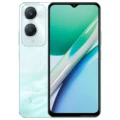
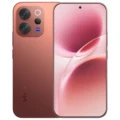
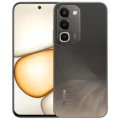
Vivo V80
+ CompareSCORE
- Released Not announced yet
- OS Android 17, OriginOS 7
- Display 6.59" 1260x2750 pixels
- Camera 50MP 2160p
- RAM 8/12GB RAM Snapdragon 7 Gen 4
- Battery 7200mAh 90W
PROS
- 1 7,200mAh battery in a body
- 2 144Hz 1.5K OLED display with a 5,000-nit local peak
- 3 Real 3x optical telephoto
- 4 90W charging reaches 50% in around 30 minutes
- 5 IP68/IP69 dust and water resistance
CONS
- 1 No expandable storage
- 2 No 3.5mm headphone jack
- 3 USB 2.0 speeds
Specification
Network
| Technology | GSM / HSPA / LTE / 5G |
| 2G bands | GSM 850 / 900 / 1800 / 1900 |
| 3G bands | HSDPA 800 / 850 / 900 / 1700(AWS) / 1900 / 2100 |
| 4G bands | 1, 2, 3, 4, 5, 7, 8, 19, 20, 28, 38, 39, 40, 41 |
| 5G bands | 1, 3, 5, 7, 8, 20, 28, 38, 40, 41, 71, 77, 78 SA/NSA - Saudi Arabia 1, 3, 5, 7, 8, 20, 28, 38, 40, 41, 77, 78 SA/NSA - UAE |
| Speed | HSPA, LTE, 5G |
Body
| Dimensions | 157.5 x 74.3 x 7.9 mm (6.20 x 2.93 x 0.31 in) |
| Weight | 205 g or 207 g (7.23 oz) |
| Build | Glass front, aluminum frame, glass back |
| SIM | Nano-SIM + Nano-SIM |
| Others | IP68/IP69 dust tight and water resistant (high pressure water jets; immersible up to 1.5m for 30 min) |
Display
| Type | AMOLED, 1B colors, 144Hz, HDR, 4320Hz PWM, 5000 nits (peak) |
| Size | 6.59 inches, 106.1 cm2 (~90.7% screen-to-body ratio) |
| Resolution | 1260 x 2750 pixels, 19.5:9 ratio (~459 ppi density) |
Platform
| OS | Android 17, OriginOS 7 |
| Chipset | Qualcomm SM7750-AB Snapdragon 7 Gen 4 (4 nm) |
| CPU | Octa-core (1x2.8 GHz Cortex-720 & 4x2.4 GHz Cortex-720 & 3x1.8 GHz Cortex-520) |
| GPU | Adreno 722 |
Memory
| Card slot A special slot for inserting a memory card. Memory cards allow you to expand the phone's built-in memory (or in the past these slots have been used to add some missing features such as Wi-Fi connectivity). Memory cards have different capacities and are used to store and transfer files between compatible devices. There are several types of memory cards. The most popular and frequently used by mobile phone manufacturers is microSD; however, up until recently Sony Ericsson exclusively used the Memory Stick Micro (M2) card type developed by Sony. | No |
| Internal Storage | 128/256/512 GB |
| RAM | 8/12 GB |
| Variant A phone variant is a specific model or version of a phone that differs slightly from other versions of the same phone from the same manufacturer. These differences can include variations in colors, sizes, features, specifications, or other attributes that distinguish one variant from another. For example, smartphones can have different storage capacities and colors, and different iPhone variants can have different cellular bands. | 8GB 128GB / 8GB 256GB / 8GB 512GB / 12GB 512GB |
Camera
| Triple A camera is a device that captures light and processes it into an image. It does this through a lens, which focuses the light onto a light-sensitive surface where a picture is formed. This could be film in traditional cameras or an electronic sensor in digital cameras. | 50 MP, f/1.8, 23mm (wide), 1/1.56", 1.0µm, PDAF, OIS 50 MP, f/2.7, 73mm (periscope telephoto), 1/1.95", 0.8µm, PDAF, OIS, 3x optical zoom 8 MP, f/2.2, 15mm, 110˚ (ultrawide) |
| Features | Zeiss optics, Ring-LED flash, panorama, HDR |
| Video The meaning of VIDEO CAMERA is a camera that records video and usually audio | 4K@30/60fps, 1080p@30/60fps, gyro-EIS, OIS, HDR, LUT |
| Selfie camera | 50 MP, f/2.0, 21mm (wide), 1/2.76", 0.64µm, AF |
More
| Loudspeaker | Yes, with stereo speakers |
| 3.5mm jack | No |
| WLAN | Wi-Fi 802.11 a/b/g/n/ac/6, dual-band |
| Bluetooth | 5.4, A2DP, LE, aptX HD, aptX Adaptive, aptX Lossless, LHDC 5 |
| GPS | GPS, GALILEO, GLONASS, QZSS, BDS, NavIC |
| NFC | Yes |
| FM radio Mobile phones that support FM radio have a dedicated FM radio receiver chip. This chip is responsible for receiving FM radio signals and converting them into audio signals that can be played through the phone's speakers or headphones. | No |
| USB | USB Type-C 2.0, OTG |
| Infrared port An infrared (IR) port is a port on an electronic device that sends and receives data using infrared light. IR ports were commonly used in wireless devices to allow for fast communication with other devices, such as base stations. IR ports work by allowing two devices to face each other and share data using infrared rays within a range of 10 meters. | |
| Sensors | Fingerprint (under display, ultrasonic), accelerometer, gyro, compass, proximity |
| Battery Type | Non-removable Si/C Li-Ion |
| Battery Capacity | 7200 mAh |
| Charging | 90W wired, PD Reverse wired |
| Made by | China |
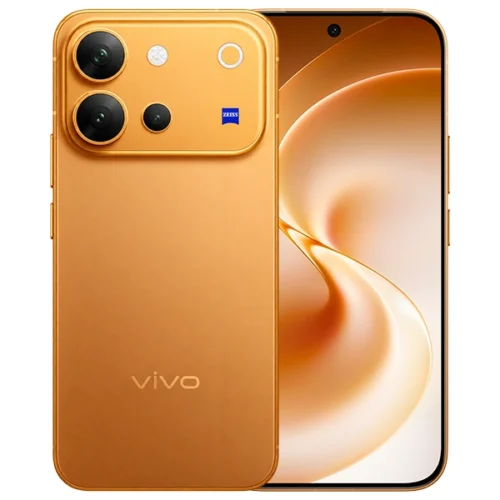
| Color | Sunrise Anthem, Horizon Blue, Stellar Black |
Disclaimer
We do not guarantee that the information of this page is 100% accurate and up to date. Read more
Vivo V80 Review & Overview
The Vivo V80 is a premium mid-range 5G phone built around a 7,200mAh battery, a 144Hz 1.5K OLED display, and a ZEISS-backed triple-camera system, with Snapdragon 7 Gen 4 performance, 90W charging, and a slim 7.9mm body rounding out a more ambitious package than a typical battery-focused mid-ranger. Vivo officially lists the V80 in markets including India and the UAE.
Vivo Pakistan’s current official catalogue lists models like the V70, V70 FE, V80 Lite 5G, and X300 FE, the V80 isn’t among them. The current Pakistani market listing of Rs. 189,999 should be treated as an imported-market price rather than a confirmed official Vivo Pakistan launch price.
Price in Pakistan
| Storage | Price (Non-PTA) |
|---|---|
| 8GB + 128GB | Around Rs. 189,999 |
| 8GB + 256GB | Around Rs. 189,999 – 205,000 |
| 8GB + 512GB | Around Rs. 210,000 – 225,000 |
| 12GB + 512GB | Around Rs. 225,000 – 240,000 |
These are indicative market prices, not official Vivo Pakistan pricing, since the V80 isn’t in Vivo Pakistan’s current catalogue. PTA-approved units work permanently on all local networks. Non-PTA units only work for a limited window, inserting a local SIM starts a 60-day countdown, after which calls, SMS, and mobile data stop working on that device unless it’s registered through PTA’s DIRBS system; Wi-Fi, the camera, Bluetooth, and offline apps keep working regardless.
The actual PTA registration charge depends on the device’s assessed customs value and the registration route, so there’s no single flat number to quote here, it’s worth generating your exact figure through DIRBS rather than relying on an estimate copied from another phone’s listing. One general pattern worth knowing: registering through a valid passport with recent travel history typically costs less than registering through a CNIC, commonly cited at roughly 15 to 20% lower, though the exact gap depends on the device’s value and current FBR valuation rather than a fixed percentage.
Design
- One of the more interesting phones in this class for fitting a 7,200mAh battery into a 7.9mm body
- Dimensions approximately 157.5 × 74.3 × 7.9mm, weight around 205-207g depending on the version
- Glass front, aluminium frame, glass rear, with a one-piece cold-carved glass design and a floating camera module giving it a more premium feel than plastic-heavy battery phones
- IP68 and IP69 dust and water resistance, useful protection against accidental exposure, not a license to deliberately dunk it
- Available in Sunrise Anthem, Horizon Blue, and Stellar Black
Display
- 6.59-inch 1.5K OLED panel, 1260 × 2750 resolution, about 459 ppi
- Up to 144Hz refresh rate, HDR support, and a reported 5,000-nit local peak brightness
- That peak figure refers specifically to small-window HDR highlights under intense ambient light, not sustained brightness across the full panel
- An ultra-low 1-nit mode for nighttime use, aimed at reducing glare in dark environments
- Gaming smoothness at 144Hz will still depend on whether individual titles actually support the higher refresh rate
Processor & Performance
- Qualcomm Snapdragon 7 Gen 4, built on a 4nm process
- CPU: one performance core up to 2.8GHz, four cores up to 2.4GHz, three efficiency cores up to 1.8GHz
- Adreno 722 GPU
- This is upper-mid-range hardware, not flagship silicon, enough headroom for social media, photography, office apps, streaming, navigation, and demanding multitasking, and capable of modern games, though sustained gaming performance will depend on thermal limits and per-game optimization
- Expected memory configurations of 8GB and 12GB RAM, storage up to 512GB, no microSD slot, so choose storage carefully upfront, the 512GB version makes more sense if you record a lot of 4K video or keep large game libraries locally
- Worth remembering: virtual or extended RAM doesn’t turn storage into physical RAM, it’s a slower swap area, not a real substitute for additional DRAM
Camera
- Main: 50MP, f/1.8, 1/1.56-inch sensor (Sony LYTIA 700V), OIS, CIPA 4.5 stabilization
- Telephoto: 50MP, 73mm equivalent, OIS, 3x optical zoom (Sony IMX882, 1/1.95-inch), giving the V80 genuine optical reach rather than relying entirely on digital cropping
- Ultrawide: 8MP, lower resolution than the other two but still a meaningfully wider field of view
- Selfie: 50MP, autofocus, also marketed for wide-angle group photography
- Video up to 4K/60fps with OIS, electronic stabilization, HDR, cinematic video modes, and LUT support
- This is a notably complete setup compared to phones that pair a strong main sensor with decorative low-resolution secondary cameras
Battery & Charging
- 7,200mAh typical-capacity BlueVolt battery (7,015mAh rated), one of the V80’s biggest advantages
- Vivo claims up to 39.5 hours of local video playback under its own lab testing
- 90W FlashCharge, reaching 50% in around 30 minutes under Vivo’s specified conditions, actual speed varies with temperature, battery level, and charger used
- Reverse wired charging supported
- The combination matters more than the raw capacity alone, a big battery with slow charging is a worse trade than this pairing of strong endurance and short downtime when it does need power
Software
- Android 17 with OriginOS 7
- Vivo’s UAE launch material advertises up to six years of extended security updates and up to 72 months of smooth performance, though the exact schedule can vary by region and model
- Pakistani buyers importing the phone should confirm the regional firmware and support policy before buying, since the software experience differs between Chinese, international, and regional Vivo builds
Connectivity
- 5G with dual Nano-SIM support, Wi-Fi 6, Bluetooth 5.4, NFC
- GPS, Galileo, GLONASS, QZSS, BDS, and NavIC
- Ultrasonic in-display fingerprint scanner, a step above the optical scanners common in cheaper mid-rangers
- Stereo speakers
- USB Type-C, but only USB 2.0 speeds, the connector looks modern but wired transfer speeds aren’t in the same class as phones with USB 3.x
- No 3.5mm headphone jack, no microSD slot
Buying in Pakistan
- Vivo Pakistan’s catalogue doesn’t currently list the V80, so there’s no confirmed local launch date, and any unit available now is imported
- Confirm warranty coverage before paying a premium for an imported unit, since there’s no official Vivo Pakistan backing it
- Check the IMEI and PTA status directly through DIRBS rather than trusting a seller’s claim that a phone is “PTA approved”
- Confirm the regional firmware matches your needs for Google services, banking apps, and OTA updates before committing
Bottom Line
The V80’s defining feature isn’t any single spec, it’s how the hardware fits together: a 7,200mAh battery, 90W charging, a 144Hz 1.5K OLED display, and a genuine 3x optical telephoto camera, all inside a roughly 205g body. The Snapdragon 7 Gen 4 gives it enough performance for demanding everyday use and gaming without pretending to be a flagship replacement, and the camera system, particularly the 50MP OIS main sensor and 3x periscope, is more serious than most phones in this class offer.
The real caution for Pakistani buyers is availability, not hardware. With no official local listing yet, the Rs. 189,999 figure is a market estimate, so verifying warranty terms, the exact regional model, and PTA status before paying matters as much as the price itself. For buyers who specifically want long battery life without sacrificing a high-refresh OLED display or real telephoto photography, the V80’s hardware is unusually well balanced, the main trade-offs are the missing microSD slot and the dated USB 2.0 interface, and the biggest open question remains official Pakistan availability.