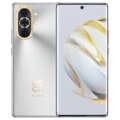
Huawei Mate X8
+ CompareSCORE
- Released Not announced yet
- OS HarmonyOS 7.0, EMUI 16
- Display 8.15" 2210x2416 pixels
- Camera 50MP 4K
- RAM 12/16/20GB RAM Kirin 9050
- Battery 6000mAh 66W
PROS
- 1 8.15-inch foldable LTPO OLED with a 6.49-inch cover display at 3,000 nits
- 2 Variable-aperture 50MP main camera (f/1.5–f/4.0) with a 50MP 3.5x periscope
- 3 6,000mAh silicon-carbon battery — large for a foldable — with 66W wired and 50W wireless
- 4 Wi-Fi 7 and Bluetooth 6.0; configurations up to 20GB RAM and 1TB
- 5 IP58/IP59 sealing, rare on foldables
CONS
- 1 Not yet announced — specifications are reported, not confirmed
- 2 Kirin 9050 variant (standard or Pro) not yet settled; CPU/GPU details unpublished
- 3 Huawei software ecosystem differs from standard Android app availability
- 4 Foldable pricing keeps it firmly in the luxury tier
Prices
Specification
Network
| Technology The mobile network technology the phone uses, such as GSM, HSPA or LTE. It determines which types of networks the phone can connect to. | GSM / CDMA / HSPA / EVDO / LTE / 5G |
| 2G bands The second-generation mobile network bands the phone can use for calls and basic data. Support for more bands means better compatibility with different networks. | GSM 850 / 900 / 1800 / 1900, CDMA 800 |
| 3G bands The third-generation mobile network bands the phone supports for calls and mobile data. More supported bands mean better compatibility with different networks. | HSDPA 800 / 850 / 900 / 1700(AWS) / 1900 / 2100, CDMA2000 1xEV-DO |
| 4G bands The fourth-generation (LTE) mobile network bands the phone supports. More supported bands mean better compatibility and coverage on different networks. | LTE |
| 5G bands The fifth-generation mobile network bands the phone supports for faster mobile data. More supported bands mean better compatibility with different networks. | SA/NSA |
| Speed The data speed the phone can support on mobile networks. Higher speeds mean faster downloads and uploads when the network supports them. | HSPA, LTE-A, 5G |
Body
| Build The materials and construction used for the phone body, such as the front glass, back and frame. | Glass front, nylon fiber or silicone polymer back (eco leather), aluminum frame |
| SIM The SIM card type and number the phone accepts, such as Nano-SIM or dual SIM. It determines how many mobile connections can be used. | Nano-SIM + Nano-SIM + eSIM (max 2 at a time) - International; Nano-SIM + Nano-SIM - China |
| Others Additional specifications that do not fit the other categories. This lists any remaining relevant details about the phone. | IP58/IP59 dust protected and water resistant (high pressure water jets; immersible up to 2m for 30 min), Aerospace-grade aluminum |
Display
| Type The kind of display panel used in the phone. Different panel types affect colour, contrast and power use. | Foldable LTPO OLED, 1B colors, 120Hz, 1440Hz PWM, HDR Vivid, 2500 nits (peak) |
| Size The diagonal size of the display, measured in inches from corner to corner. | 8.15 inches |
| Resolution The number of pixels in the display, shown as width by height. Higher resolution generally means a sharper image. | 2210 x 2416 pixels (~402 ppi density) |
| Features Additional functions included for that part of the phone, such as special modes or enhancements. The list shows which extra functions are supported. | Privacy Display (optional). Cover display: LTPO OLED, 120Hz, 1440Hz PWM, HDR, 3000 nits (peak), 6.49 inches, 1080 x 2444 pixels, Kunlun Glass 2, 412 ppi |
Platform
| OS The operating system software that runs the phone and its apps. Its version affects features, security and app compatibility. | EMUI 16 (International), HarmonyOS 7.0 (China) |
| Chipset The main processor platform that powers the device. It controls performance, power efficiency and supported features. | Kirin 9050 or Kirin 9050 Pro |
Memory
| Card slot A special slot for inserting a memory card. Memory cards allow you to expand the phone's built-in memory (or in the past these slots have been used to add some missing features such as Wi-Fi connectivity). Memory cards have different capacities and are used to store and transfer files between compatible devices. There are several types of memory cards. The most popular and frequently used by mobile phone manufacturers is microSD; however, up until recently Sony Ericsson exclusively used the Memory Stick Micro (M2) card type developed by Sony. | No |
| Internal Storage The built-in storage space for apps, photos and files, measured in gigabytes. More storage lets you keep more content on the phone. | 256/512 GB, 1TB UFS 4.x |
| RAM The memory the phone uses to run apps and keep them open in the background, measured in gigabytes. More RAM generally helps multitasking run smoothly. | 12/16/20 GB |
| Variant A phone variant is a specific model or version of a phone that differs slightly from other versions of the same phone from the same manufacturer. These differences can include variations in colors, sizes, features, specifications, or other attributes that distinguish one variant from another. For example, smartphones can have different storage capacities and colors, and different iPhone variants can have different cellular bands. | 12GB 256GB / 12GB 512GB / 16GB 512GB / 16GB 1TB / 20GB 1TB |
Camera
| Triple A camera is a device that captures light and processes it into an image. It does this through a lens, which focuses the light onto a light-sensitive surface where a picture is formed. This could be film in traditional cameras or an electronic sensor in digital cameras. | 50 MP, f/1.5-f/4.0, 24mm (wide), 1/1.28", PDAF, OIS + 50 MP, f/2.2, 81mm (periscope telephoto), PDAF, OIS, 3.5x optical zoom + 40 MP, f/2.2, 13mm, 120° (ultrawide), PDAF |
| Features Additional functions included for that part of the phone, such as special modes or enhancements. The list shows which extra functions are supported. | Laser AF, color spectrum sensor, LED flash, panorama, HDR |
| Video The meaning of VIDEO CAMERA is a camera that records video and usually audio | 4K, 1080p, 1080p@960fps, HDR, gyro-EIS, OIS, HDR Vivid |
| Selfie camera The front-facing camera used for self-portraits and video calls. Higher megapixels can give more detail, along with features such as autofocus or flash. | 8 MP, f/2.2 (wide); Cover camera: 8 MP, f/2.4 (wide); Video: 4K, 1080p |
More
| Loudspeaker The built-in speaker used for calls on speakerphone, music and videos. It states whether the phone has one and its type, such as stereo speakers. | Yes, with stereo speakers |
| 3.5mm jack A round headphone port for wired headphones and audio accessories. If present, wired audio can be used without an adapter. | No |
| WLAN The Wi-Fi standards the phone supports for wireless internet. Newer standards generally offer faster speeds and better connections. | Wi-Fi 802.11 a/b/g/n/ac/6/7, dual-band, Wi-Fi Direct |
| Bluetooth A short-range wireless technology for connecting accessories such as headphones and speakers. A newer version generally offers better range, speed and power efficiency. | 6.0, A2DP, LE, L2HC |
| GPS Satellite positioning used to find the phone location for maps and navigation. Support for more satellite systems can improve accuracy. | GPS (L1+L5), GLONASS, BDS, GALILEO, QZSS, NavIC |
| NFC Near Field Communication, a short-range wireless feature for contactless payments and quick pairing. It works only over very short distances. | Yes |
| FM radio Mobile phones that support FM radio have a dedicated FM radio receiver chip. This chip is responsible for receiving FM radio signals and converting them into audio signals that can be played through the phone's speakers or headphones. | No |
| USB The USB port used for charging and data transfer. Newer USB versions generally offer faster transfer speeds and a reversible connector. | USB Type-C 3.1, OTG, DisplayPort 1.2 |
| Infrared port An infrared (IR) port is a port on an electronic device that sends and receives data using infrared light. IR ports were commonly used in wireless devices to allow for fast communication with other devices, such as base stations. IR ports work by allowing two devices to face each other and share data using infrared rays within a range of 10 meters. | |
| Sensors Built-in sensors that detect motion, light, position and other conditions. They enable features such as auto-rotation, face unlock and navigation. | Fingerprint (side-mounted), accelerometer, gyro, proximity, compass, barometer, BDS Satellite and Messaging - China only |
| Battery Type The kind of battery used in the phone and whether it can be removed. It describes the battery technology and form. | Non-removable Si/C Li-Ion |
| Battery Capacity The size of the battery, measured in milliamp-hours (mAh). A higher capacity usually means longer use between charges. | 6000 mAh |
| Charging How the battery is charged, including wired and wireless charging speeds in watts. Higher wattage usually means faster charging. | 66W wired, 50W wireless, 7.5W reverse wireless, 5W reverse wired |
| Color The color options in which the phone is available. Color choice does not affect performance or features. | Black, White, Red, Purple, Blue |
Disclaimer
We do not guarantee that the information of this page is 100% accurate and up to date. Read more
Overview
The Huawei Mate X8 has not been announced yet. The specification below is the reported sheet for Huawei’s next book-style foldable: an 8.15-inch main display, a variable-aperture camera system and a 6,000mAh silicon-carbon battery. Every figure is reported until Huawei’s announcement, and the chipset itself is listed as a Kirin 9050 or Kirin 9050 Pro — Huawei has not settled that detail publicly.
Price in Pakistan
No official price exists for the Mate X8 yet. The figures below are expected Pakistan prices, suggested from the reported specifications and comparable foldables already listed on PhonePrice, and they will be replaced when Huawei announces real pricing.
| Variant | Price in Pakistan (Expected) |
|---|---|
| 12GB + 256GB | Rs. 479,999 (Expected) |
| 12GB + 512GB | Rs. 509,999 (Expected) |
| 16GB + 512GB | Rs. 539,999 (Expected) |
| 16GB + 1TB | Rs. 599,999 (Expected) |
| 20GB + 1TB | Rs. 639,999 (Expected) |
Foldables reach Pakistan through importers first, sold Non-PTA until any official local launch. Verify the IMEI and PTA status via DIRBS before paying for any unit at this price level.
Design & Build
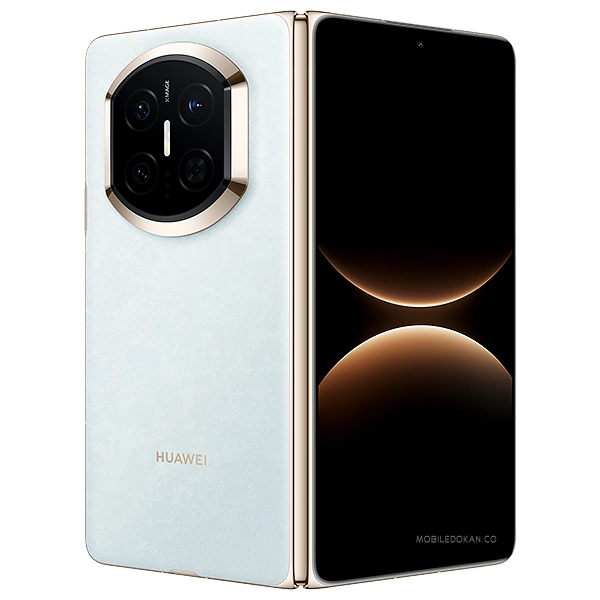
A glass front with a nylon fibre or eco-leather back on an aerospace-grade aluminium frame, in Black, White, Red, Purple and Blue. IP58/IP59 sealing covers immersion to 2m and high-pressure jets — serious protection for a folding phone. Dimensions and weight are not yet confirmed.
Display
The main panel is an 8.15-inch foldable LTPO OLED at 2210 x 2416 pixels, 120Hz, with 1440Hz PWM dimming and a 2,500-nit peak. The 6.49-inch cover display is also LTPO OLED at 120Hz, peaks higher at 3,000 nits, and is protected by Kunlun Glass 2.
Performance
The Kirin 9050 or 9050 Pro — Huawei lists the part both ways in the reported material, and CPU and GPU details are unpublished, so this page leaves them blank rather than guessing. Memory configurations are generous: 12GB, 16GB or 20GB of RAM with up to 1TB of UFS storage. Virtual RAM extensions, where offered, are not physical RAM.
Camera
A 50MP main camera with a variable f/1.5–f/4.0 aperture on a large 1/1.28-inch sensor, a 50MP 3.5x periscope telephoto and a 40MP ultrawide, with laser autofocus and a colour spectrum sensor. Two 8MP selfie cameras — one in the main display, one in the cover — keep the design clean at the cost of selfie resolution.
Battery & Charging
A 6,000mAh silicon-carbon battery, large by foldable standards, with 66W wired charging, 50W wireless, and both reverse wireless (7.5W) and reverse wired (5W) output.
Software & Connectivity
HarmonyOS 7.0 in China and EMUI 16 internationally, as reported. Connectivity is current-generation: 5G, Wi-Fi 7, Bluetooth 6.0, NFC, USB Type-C 3.1 with DisplayPort 1.2, and multi-system satellite positioning; BDS satellite messaging is listed for China only. Huawei’s software ecosystem differs from standard Android app availability — buyers should confirm their essential apps before importing.
Final Verdict: Huawei’s foldable brief keeps getting stronger
On the reported sheet, the Mate X8 pairs the largest battery in its class with a variable-aperture camera system and displays that peak at 3,000 nits outside and 2,500 inside. The open questions are the Kirin variant and the price. Huawei’s announcement answers both.